People use the terms augmented reality and virtual reality interchangeably all the time — and it drives those of us who work with both technologies a little bit crazy. They are not the same thing. They don't work the same way. They don't feel the same way. And understanding the difference between them will completely change how you think about immersive technology — and why Jacksonville Beach now has an experience unlike anything else in Northeast Florida.
Let's start at the beginning.
What Is Virtual Reality?
Virtual reality is exactly what it sounds like — a completely artificial reality. When you put on a VR headset, the device covers your eyes entirely and replaces everything you see with a computer-generated environment. The real world disappears. The room you're standing in disappears. The people around you disappear. You are transported, visually and aurally, into a simulation.
The technology has been around in various forms since the 1960s. The consumer version most people are familiar with — Meta Quest, PlayStation VR, HTC Vive — arrived in force around 2016. Since then, VR has found homes in gaming, military training, medical simulation, and high-intensity entertainment venues. The experiences can be extraordinary. But the tradeoffs are real.
The most significant one is motion sickness. When your eyes tell your brain you're moving through a virtual space but your body isn't actually moving, the sensory conflict produces nausea in a substantial portion of users. Studies estimate that anywhere from 25 to 40 percent of VR users experience some level of discomfort. For a family outing, a date night, or a group corporate event, that's a meaningful concern.
The other tradeoff is isolation. In VR, you're alone — even when you're in the same room as other people. You can't see them. They can't see your natural expressions. The shared social experience that makes group entertainment memorable largely disappears behind the headset.
What Is Augmented Reality?
Augmented reality takes a fundamentally different approach. Instead of replacing the real world, AR layers digital content on top of it. You still see the room around you, the floor beneath your feet, and the people standing next to you. The digital world is added to your reality — not substituted for it.
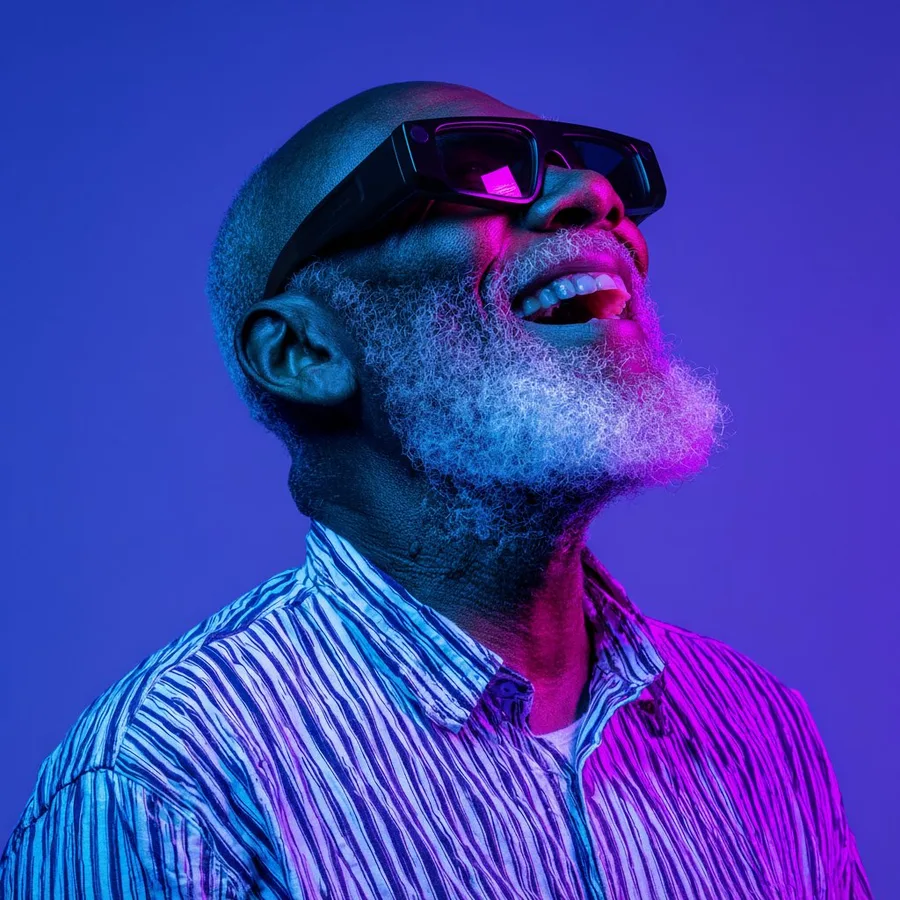
The term "augmented reality" was coined in 1990 by Tom Caudell, a researcher at Boeing, to describe a head-up display system that helped technicians wire airplane cabins by overlaying schematic diagrams onto the actual equipment. The concept was simple and practical: give people useful digital information without taking them away from the physical world they're operating in.
Most people's first encounter with modern AR was Pokémon GO — the 2016 mobile game that showed digital creatures through your phone's camera overlaid on whatever street, park, or living room you happened to be standing in. Hundreds of millions of people experienced AR through that game without necessarily realizing they were doing it. Snapchat filters are another example: the digital dog ears that appear on your face are AR.
"Somewhere between an interactive museum and the first generation of the Holodeck from Star Trek" — that's how Verse Immersive, the technology powering our AR experiences at Mind Bender, describes what you'll encounter when you walk through our doors.
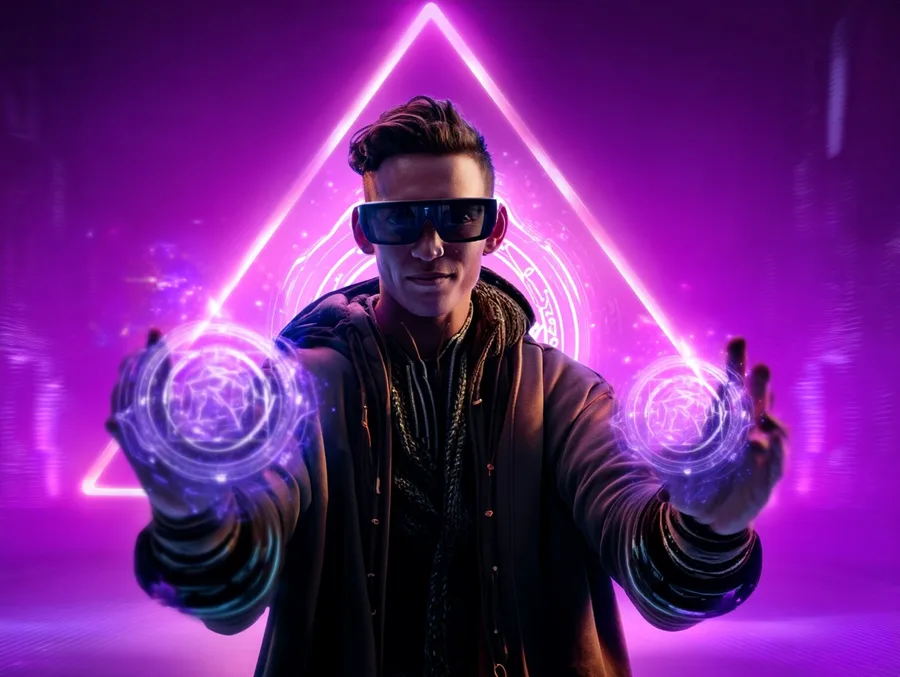
But consumer smartphone AR is only the beginning. Location-based AR — the kind you'll find at Mind Bender AR in Jacksonville Beach — uses dedicated AR glasses to project fully rendered, room-scale holographic worlds into a shared physical space. It's a category of experience that has almost nothing in common with your phone camera and a cartoon filter.
The Key Differences: AR vs. VR Side by Side
Understanding the distinctions in plain terms matters — especially if you're choosing between the two for a night out, a family outing, or a corporate team event. Here's how they compare on the factors that actually affect your experience:
| Factor | Augmented Reality (AR) | Virtual Reality (VR) |
|---|---|---|
| Real World Visibility | You see your surroundings at all times | Real world is completely blocked out |
| Motion Sickness | Virtually none — brain stays grounded | Common — affects 25–40% of users |
| Social Experience | You see and interact with your group | You're isolated inside your headset |
| Equipment | Lightweight glasses | Heavy opaque headset |
| Age Accessibility | Ages 7 and up | Often not recommended under 13 |
| Physical Freedom | Walk freely through full space | Limited movement, tethered or bounded |
| Group Dynamic | Shared physical experience | Parallel solo experiences |
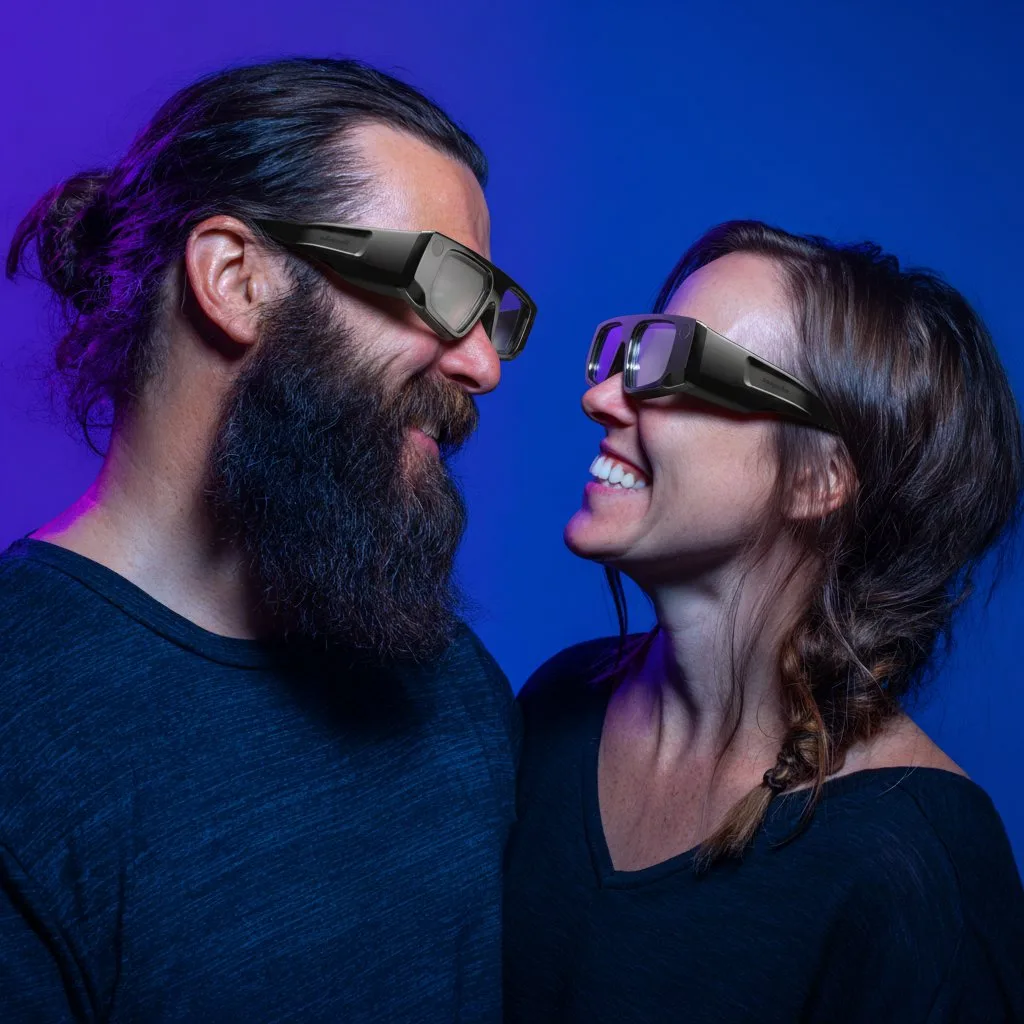
The difference that matters most for entertainment — the one that changes everything about the experience — is that AR keeps you in the room with your people. When something extraordinary appears in the holographic world around you, you can turn to the person next to you and watch their face. You can react together. That shared moment of wonder is something VR simply cannot deliver.
The Motion Sickness Question
Motion sickness in VR happens for a specific physiological reason. Your eyes tell your brain you're moving through space, but your vestibular system — the balance mechanism in your inner ear — detects no corresponding physical movement. This conflict, called vestibular-ocular mismatch, is what produces nausea. Your brain interprets the conflict as potential poisoning (an evolutionary response) and triggers the same symptoms.
AR eliminates this problem almost entirely. Because you can always see the real floor, real walls, and real people around you, your brain maintains its accurate spatial reference. There's nothing to conflict with. At Mind Bender AR, in thousands of guests who have come through our doors, we have had virtually zero cases of motion sickness. The rare exception has been guests who were already feeling unwell before they arrived.
For families with children, older guests, or anyone who has had a bad VR experience in the past — AR is genuinely different. It is not a modified version of VR. It is a completely separate technology that doesn't share VR's most significant consumer complaint.
Augmented Reality in Jacksonville Beach
Jacksonville has several options for VR entertainment. Zero Latency Jax offers free-roam virtual reality in a large warehouse space — a solid experience for the right audience. But until recently, there was nothing in Northeast Florida for the segment of the market that wants immersive technology without the headset isolation, the motion sickness risk, or the age limitations.
Mind Bender AR at 1500 Beach Blvd in Jacksonville Beach is the first and only permanent, location-based augmented reality experience in Northeast Florida. Powered by Verse Immersive — the same platform operating at premier entertainment venues across the country — we bring two holographic worlds to Jacksonville Beach: The Unreal Garden and Star Walk.
In The Unreal Garden, guests walk through a magical environment where life-sized holographic animals appear all around them — frogs, rabbits, snails, elephants. The creatures exist in the same physical space you're standing in, rendered in three dimensions by Snap Spectacles AR glasses. Each guest has their own independent experience, exploring at their own pace, while still sharing the same physical room with their group.
In Star Walk, guests walk through the solar system. The sun. Mars. Saturn and its rings. Celestial phenomena rendered at a scale that makes the cosmos feel immediate and personal. It is, to put it plainly, unlike anything else available in this part of Florida.
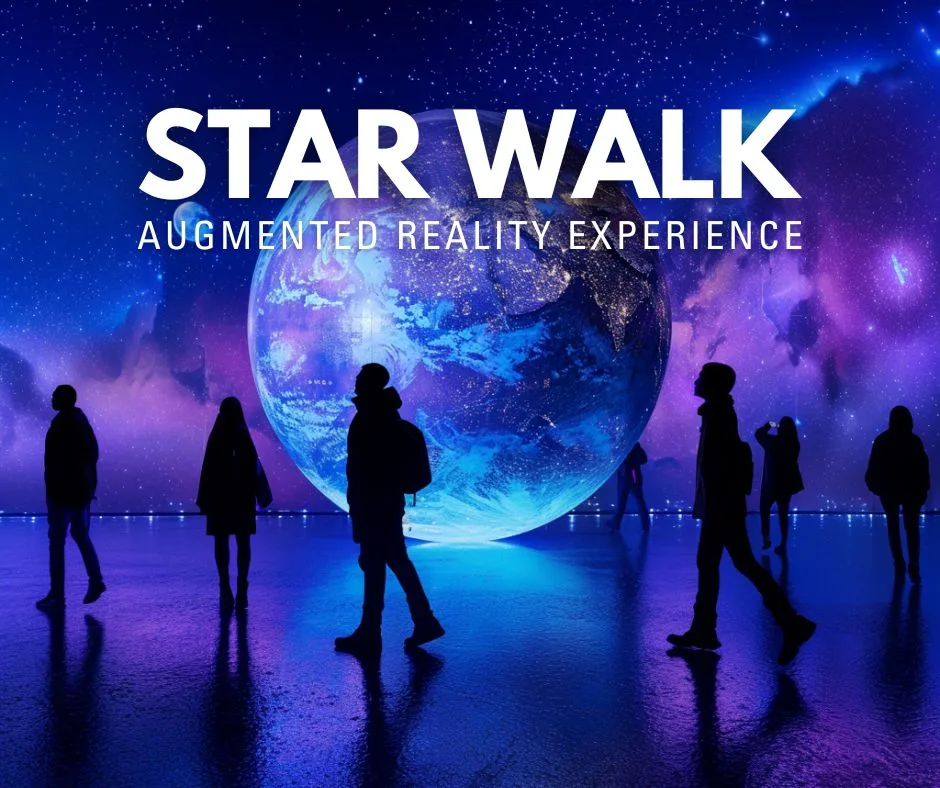
Jacksonville's first and only Verse Immersive AR experience is waiting for you at Mind Bender, Jacksonville Beach.
Book AR RoomWho Is AR Right For?
The honest answer is: almost everyone. That's not marketing language — it's the genuine advantage AR holds over VR when it comes to group entertainment.
VR works beautifully for solo gaming, flight simulation, training scenarios, and experiences designed for a single user in controlled conditions. But entertainment venues, family outings, date nights, corporate team building — these are group experiences. They depend on shared moments, shared reactions, and the ability to look at another person and say "did you just see that?"
AR delivers all of that. It's appropriate for ages seven and up — the lower age limit exists because the glasses need to fit properly and because the independent narrative structure of each experience can be challenging for very young children to follow on their own. But from seven to seventy, the experience works across the full range.
Families with Kids
The Unreal Garden in particular is gentle, wonder-filled, and entirely appropriate for children. The holographic animals are beautiful rather than frightening. The experience encourages curiosity rather than competition. It is, in the best sense, a shared family memory.
Date Nights
Walking through the solar system together — or comparing notes on which animals you encountered in The Unreal Garden — makes for conversation that dinner and a movie simply cannot generate. Something about a genuinely novel shared experience accelerates connection in a way that familiar activities don't.
Corporate Team Building
The experience works for groups of up to ten guests simultaneously. Everyone is in the same space, sharing the same holographic environment, while each pursuing their own independent journey through it. The conversations that follow — about what each person noticed, what surprised them, what they wish they'd had more time with — are exactly the kind of organic engagement corporate team building is trying to manufacture through more contrived means. Want something different? Our escape rooms offer a completely different kind of team challenge.
AR Is the Future — And It's Already Here
The global AR and VR market was valued at over $40 billion in 2026 and is projected to reach $441 billion by 2034, growing at a compound annual rate of nearly 35 percent. Of that growth, AR is expected to outpace VR significantly — driven by its accessibility, its applicability across industries, and the fact that it doesn't ask users to abandon the physical world to engage with digital content.
Major technology companies — Apple, Google, Meta, Snap — are investing billions in AR hardware and infrastructure. The Snap Spectacles glasses that power the Verse Immersive experience at Mind Bender AR are part of that frontier. Jacksonville Beach now has a front-row seat to where immersive technology is going.
The question isn't whether AR will become the dominant form of immersive entertainment. It's whether you've experienced it yet.
Stop reading about it. Come experience it. Mind Bender AR — 1500 Beach Blvd, Jacksonville Beach. Open daily.
Book AR Room